
Shock Wave

Steel Looping Coaster

Height Requirement (Solo)

42 inches

Closed
Fast Lane Logo

Ride Alert: Shock Wave is experiencing extended downtime due to maintenance. Its reopening date is unknown.

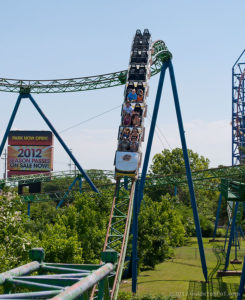
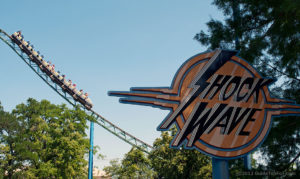
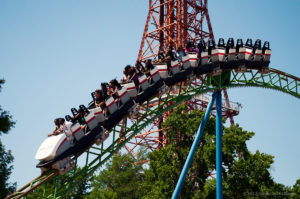
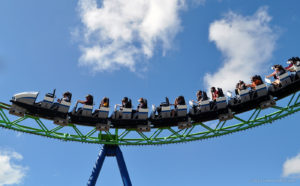
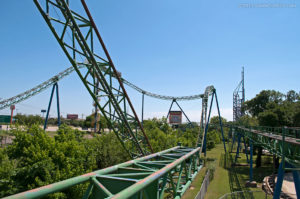
Shock Wave is a classic, steel looping roller coaster added to the Tower section of Six Flags over Texas in 1978. When the ride opened it was the tallest, continuous-circuit coaster in the world. Shock Wave remains one of the few looping coasters with simple lap bars for restraints and is widely regarded as a classic.

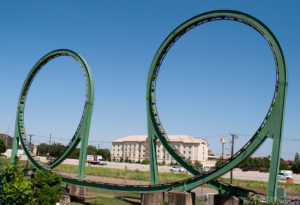
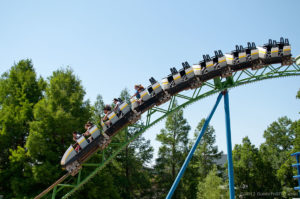
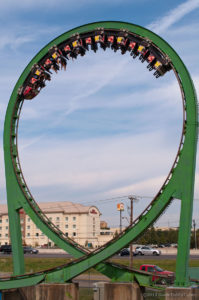
Though it may look tame compared to some of today’s rides, Shock Wave is easily one of the most intense coasters in the world by peak G-forces. Its two vertical loops are circular instead of the elliptical shape used for most loops, producing up to 6 Gs. At the opposite end of the force spectrum, Shock Wave’s multiple hills provide powerful airtime, a rare feature on an inverting coaster.

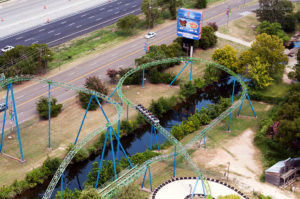
Shock Wave’s location alongside Interstate 30 reportedly caused a few highway wrecks when it first opened due to distracted drivers.
Shock Wave Stats

Ride Type:Steel looping coaster
Height:116 ft
Top Speed:60 mph
Length:3600 ft
Year Introduced:1978
Inversions:2
Manufacturer:Schwarzkopf
Duration:2 min
Height Requirement:42 in
Status:Operating
Flash Pass Enabled:No
+

Where to Sit?

Sit in the back for the most powerful airtime throughout the ride. And try looking out to the side during the loops to literally watch the world turn upside down.

Tip

Sit upright and keep your head against the headrest during the loops. If you lean forward, the loops' powerful G-forces become quite unpleasant!

Ongoing Rehabilitation

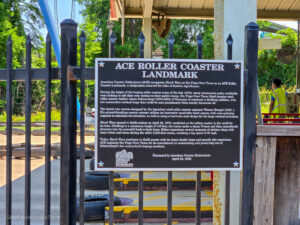
Shock Wave has thrilled guests of Six Flags over Texas for nearly 50 years, but the ride has essentially outlived the expected operational life for which it was designed. Instead of removing the ride, the park has decided to invest in its historical significance. Shock Wave is occasionally closed for annual rehabilitation on the ride’s track, so be sure to check its status before visiting if it’s a priority for you.

Technical Details

Though often credited to Schwarzkopf, Shock Wave was actually designed by Werner Stengel, a prolific German engineer that has worked on countless modern coasters. Anton Schwarzkopf’s company handled the manufacturing and technical details of the ride.

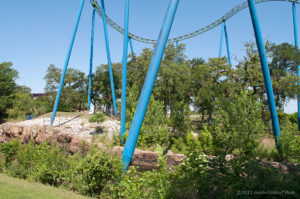
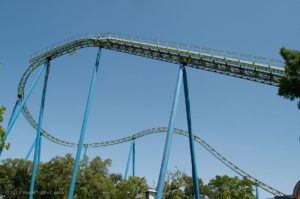
Shock Wave’s track uses a rigid, four-sided lattice design that minimizes the supports needed due to its inherent strength. The supports are also known for their skinny, toothpick-like look. They taper down to a sphere-shaped end near their base and interlock with a socket in each footer, forming an innovative ball-and-socket connection (similar to La Vibora). Instead of creating a rigid connection between the support and footer, the design allows relative motion reducing stress. The design also results in track that sways more than the average coaster as trains pass by, furthering the illusion of danger. Guy wires attached to various sections of track add stability.

No Results Found.

The page you requested could not be found. Try refining your search, or use the navigation above to locate the post.

Shock Wave Discussion

0 Comments

Submit a Comment

Your email address will not be published. Required fields are marked *

This site uses Akismet to reduce spam. Learn how your comment data is processed.